 The Federal Tax Authority (FTA) has announced that businesses must complete Corporate Tax registration within 90 days from the Date of Incorporation / MOA.
VAT Impact on Company Profit in UAE: Key Factors Businesses Must Understand
19-Jan-2026
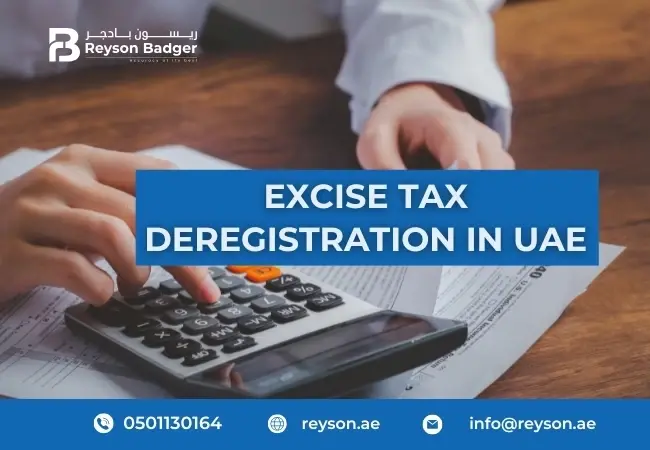
Excise Tax Deregistration in UAE
Excise Tax Deregistration in UAE
As your business evolves or ceases operations, managing ongoing tax obligations can become complex. Properly deregistering for Excise Tax in the UAE is essential to ensure legal compliance and avoid future liabilities or penalties. At Reyson Badger, we specialize in simplifying the deregistration process, guiding you smoothly through every step to ensure a compliant exit from your Excise Tax responsibilities.
Why Deregister for Excise Tax?
Deregistration becomes necessary when your business no longer meets the criteria for Excise Tax registration. Common scenarios include the cessation of activity involving excise goods such as import, production, or stockpiling—or the closure of your business entity altogether. Changes in your business structure that render Excise Tax registration unnecessary also necessitate deregistration. Acting promptly prevents ongoing compliance obligations, reduces administrative burdens, and minimizes the risk of penalties stemming from non-compliance.
Who Needs to Deregister for Excise Tax?
A taxable person (individual or corporate) who is no longer liable for excise tax -because they have ceased import, production, or stockpiling of excisable goods -should apply for deregistration, provided they meet all conditions (e.g. no intention to resume excise activity, all obligations settled). This includes those who have stopped importing, producing, or stockpiling excise goods. Warehouse operators no longer responsible for excise zones or warehouses must deregister, as do businesses that have liquidated or ceased operations in the UAE. If a taxable person ceases engaging in excisable activity and meets the deregistration criteria, they should apply for deregistration - failure to deregister where still liable constitutes non-compliance.
The Excise Tax Deregistration Process: A Simplified Overview
The deregistration process in the UAE is primarily conducted online via the Federal Tax Authority’s (FTA), EmaraTax platform. Here are the key steps:
- Eligibility Assessment: Verify that your business qualifies for deregistration based on current activities and status.
- Document Preparation: Gather essential supporting documents, such as proof of cessation (e.g., trade license cancellation, financial statements).
- Application Submission: Complete and submit your deregistration application through EmaraTax.
- Liability Clearance: Ensure all outstanding Excise Tax liabilities, penalties, and returns are settled.
- Final Return Submission: If applicable, file any final Excise Tax returns.
- FTA Review & Approval: The FTA reviews your application and grants approval if all requirements are met.
The entire process duration varies depending on your application’s completeness and FTA processing times typically ranging from a few weeks to a couple of months.
Common Challenges and Risks of DIY Deregistration
DIY deregistration can be tricky due to the complexity of tax laws and documentation requirements. Mistakes or incomplete applications may result in delays, penalties, or ongoing liabilities. Missed deadlines and incorrect submissions can lead to hefty administrative fines and continued non-compliance risks, making professional guidance highly advisable.
How Reyson Badger Ensures a Smooth Deregistration?
As an FTA-registered tax agent with extensive expertise in UAE tax laws, Reyson Badger offers comprehensive support, including:
- Thorough eligibility assessment
- Assistance with gathering and verifying documents
- Accurate preparation and submission of your deregistration application
- Liaising directly with the FTA on your behalf
- Guidance on settling outstanding liabilities and filing final returns
Partnering with us guarantees a hassle-free process, saving you valuable time, avoiding penalties, and ensuring full compliance all while providing peace of mind.
Ready to Deregister? Contact Us Today
Let our experts handle your excise tax deregistration efficiently and in full compliance. Reach out now for a consultation!
FAQs
What is Excise Tax Deregistration?
It is the legal process of formally removing your business from the UAE Excise Tax register when you no longer meet registration criteria.
When should I apply for Excise Tax Deregistration in UAE?
As soon as your business ceases activities involving excise goods or closes down, or if your structure changes rendering registration unnecessary.
What documents are required for Excise Tax Deregistration in UAE?
Proof of cessation, trade license cancelation, financial statements, and any relevant documentation substantiating the cessation of activities.
Are there any penalties for late or non-deregistration?
Yes, failure to deregister when required can lead to penalties, continued tax liabilities, and compliance issues.
How long does the deregistration process take?
If your deregistration application is complete and meets all criteria, the FTA aims to complete the deregistration process within 20 business days.
VAT
Tax Consultant Services for Industries
- Tax Consultant Services for Insurance in UAE
- Tax Consultant Services for Event Management in UAE
- Tax Consultant Services for Manufacturing Industry in UAE
- Tax Consultant Services for Marine Industry in UAE
- Tax Consultant Services for Oil and Gas in UAE
- Tax Consultant Services for Real Estate in UAE
- Tax Consultant Services for Restaurants in UAE
- Tax Consultant Services for E-Commerce in UAE
- Tax Consultant Services for Logistics & Transportation in UAE
- Tax Consultant Services for Technology in UAE
- Tax Consultant Services for the Construction Industry
- Tax Consultant Services for Healthcare in UAE
- Tax Consultant Services for the Education Industry in UAE
- Tax Consultant Services for Retail and Wholesale Trade
- Tax Consultant Services for Automotive Industry
- Tax Consultant Services for Hospitality and Tourism in UAE


Request a Quote
We’ll get back to you shortlyFAQs
It’s advisable to settle all outstanding liabilities and file final returns before deregistration to avoid issues.
Yes, upon approval, you will receive an official deregistration certificate from the FTA.
Absolutely. Engaging a registered tax agent like Reyson Badger simplifies the process and ensures compliance.
Latest Blogs
04
Feb
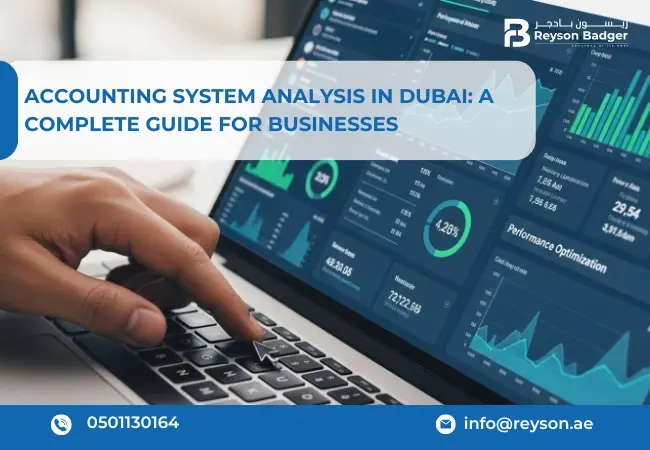
Accounting System Analysis in Dubai: A Complete Guide for Businesses
Accounting System Analysis Services in Dubai and UAE, businesses gain clarity, control, and confidence in their financial operations turning accounting systems.
READ MORE →
03
Feb
Information System Audit for SMEs: What You Need to Know
Information System audits help UAE SMEs protect data, stay compliant, and strengthen operations for secure, sustainable business growth.
READ MORE →
03
Feb
Mandatory Audit Requirements for UAE Mainland Companies
Mandatory audits are required for UAE mainland companies to maintain compliance, ensure transparency, and support sound financial reporting.
READ MORE →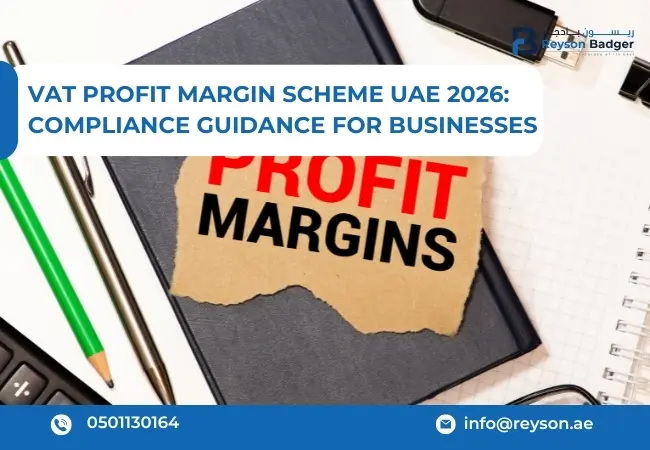
03
Feb
VAT Profit Margin Scheme UAE 2026: Compliance Guidance for Businesses
The VAT Profit Margin Scheme in UAE 2026 allows eligible businesses to calculate VAT on profit margins instead of full selling prices, ensuring simplified compliance and reduced tax burden.
READ MORE →
29
Jan
Business License Issuance and Renewal Services: What You Need to Know?
A practical guide to business license issuance and renewal in the UAE, including steps, timelines, and key requirements.
READ MORE →
04
Feb
Top Mistakes Tourists Make While Claiming VAT Refund in Saudi Arabia
Tourists often lose their VAT Refund in Saudi Arabia due to small mistakes. Discover common errors and tips to claim your refund successfully.
READ MORE →
04
Feb
UAE VAT Compliance Calendar: Key Deadlines and Filing Dates
A complete UAE VAT compliance calendar highlighting key VAT filing deadlines, return due dates, and important timelines to help businesses avoid penalties.
READ MORE →
05
Feb
VAT Assessment and Compliance Services in UAE: Key Risks, Obligations, and Best Practices
This blog explains VAT assessment and compliance services in the UAE, covering regulatory obligations, common compliance risks, and best practices businesses must follow. Learn how proper VAT reviews, accurate filings, and transaction assessments help avoid penalties and ensure alignment with Federal Tax Authority (FTA) requirements.
READ MORE →
05
Feb
How VAT Refund Schemes in Saudi Arabia Compare with UAE & Other GCC Countries?
Explore how VAT refund schemes in Saudi Arabia differ from the UAE and other GCC countries. This blog compares eligibility, processes, timelines, and compliance requirements, helping businesses and tourists understand key refund opportunities and regional VAT recovery strategies.
READ MORE →
22
Jan
Accounts Outsourcing Services in Dubai: What Every Business Owner Should Know
Accounts Outsourcing Services in Dubai cover essential finance functions through a structured and professional workflow, compliant, and financially organized.
READ MORE →